Ever feel like your HVAC is working hard but your home still feels off? Static pressure might be the reason.
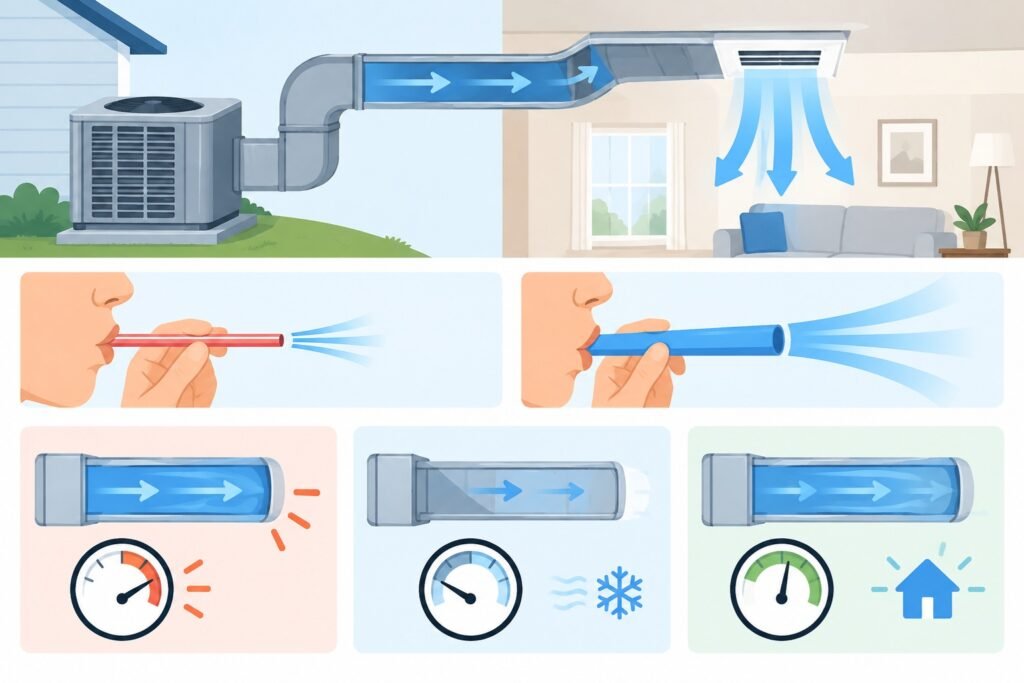
So, what is static pressure? It is the push of air inside your ducts. Think of it like blowing through a straw. A small straw is hard to blow through. A big straw is easy.
Static pressure in HVAC works the same way. Too high, and your system strains. Too low, and air barely moves. Both cost you money and comfort.
Here, we explain it in plain words. Let’s get started.
Static Pressure in Plain Words
Picture a balloon. When you blow it up, the air pushes on the walls. That push is pressure. Now think of your ducts. Your fan blows air into them. The air pushes on the duct walls. That push is static pressure. It is not about how fast the air moves. It is about how hard the air pushes.
Pros measure it in “inches of water column.” That sounds odd, but it is just a unit, like inches on a ruler. Knowing what is static pressure helps you spot trouble early.
Your Fan Needs a Clear Path
Your HVAC fan is like a runner. A runner needs a clear road. If the road is blocked, the runner gets tired fast. Your ducts are the road for your air. Filters, tight bends, and small pipes slow the air down. The fan must push harder to get past them.
That extra work is what people mean by static pressure HVAC talk. A little push is fine. Too much push wears the fan out. Ever run with a stuffy nose? It feels hard, right? Your fan feels the same way when air cannot flow free.
The Magic Number to Know
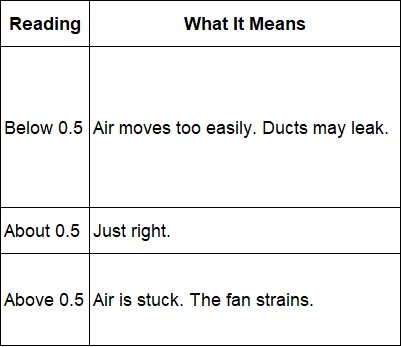
Most homes aim for about 0.5 inches of water column. Think of it as the sweet spot, like a warm bath that is not too hot or too cold. A tech checks it with a tool called a manometer. The tool has two small probes. One goes before the fan. One goes after. The tool shows the push your fan has to beat. Here is a simple guide:
Picture a balloon. When you blow it up, the air pushes on the walls. That push is pressure. Now think of your ducts. Your fan blows air into them. The air pushes on the duct walls. That push is static pressure. It is not about how fast the air moves. It is about how hard the air pushes.

Need help with your AC?
Beach Front Air’s licensed technicians handle AC repair, maintenance, and new system installation across Pinellas and Hillsborough counties.
Clues Your System Is Struggling
Your home can tell you when something is wrong. Look and listen for these clues:
- Loud whooshing or whistling from vents
- Rooms that stay hot or cold
- Weak air coming out of vents
- A system that runs and runs
- Dust piling up fast
- Bills that keep going up
One clue alone may not mean much. But two or three? That is a sign to look closer. Your system is not being mean. It is asking for help. The sooner you listen, the less you will pay later.
Too High or Too Low: What’s the Difference?
Both sides cause trouble, but in different ways. High pressure means the air is stuck. Think of a clogged drain. The fan pushes and pushes, but not much gets through. Low pressure is the other way. The air slips out too easily, maybe through leaks or ducts that are too big.
Then the air has little force to reach far rooms. High pressure wears out parts. Low pressure leaves rooms uncomfortable. Either way, your system works harder than it should. That costs you money and comfort every single day.
The Dirty Filter Trap
Here is a surprise. The biggest cause is often the cheapest part. It is your air filter! A dirty filter is like a mask full of dust. Try breathing through it. It is hard work. Your fan feels the same. Air cannot get in, so pressure climbs. Many people forget to change filters.
Some filters need a swap every month. Others last three months. Check the box to be sure. Also, a thicker filter is not always better. Some systems cannot handle it. Pick the right size and type for your system.
When the Ducts Are Wrong Size
Ducts come in all sizes. Sometimes they are too small. Think of drinking a thick milkshake through a tiny straw. You will tire out! Small ducts make pressure shoot up. Other times ducts are too big. Then air slows down and loses its push. Why does this happen?
Maybe a past owner added a new room. Maybe the first plan was just off. Many homes have this problem, and most owners never know. A pro can check your ducts and tell you if they match your system.
What It Costs You
Bad static pressure is like a leaky bucket for your wallet. Your fan uses more power. Your bills go up. Parts wear out fast. A blower motor that should last years may quit early. Repairs can cost a lot. Rooms may stay too hot or too cold too. Some rooms may even feel damp or stuffy.
That is not good for sleeping or working at home. The good news? Fixing the problem early often costs much less than fixing a broken system. A small tune-up now can save you big money later.
Simple Fixes You Can Try Today
You do not need to be a pro to help your system. Try these easy steps:
- Change your air filter on time
- Keep vents open and clear
- Move couches and rugs off vents
- Look for gaps or holes in visible ducts
- Wipe dust off vent covers
- Book a yearly tune-up
These steps take just a few minutes. They cost little or nothing. Best of all, they help your system breathe easier. If problems stay after these steps, it may be time to call for help.
When to Call a Pro
Some jobs are too big to do alone. Ducts hide in walls and attics. Checking pressure needs special tools. If you hear loud noises, feel weak air, or see high bills, call an HVAC pro. They can test your pressure, check your ducts, and find the real cause.
Ask them for the reading in inches of water column. Ask if it is close to 0.5. Good pros are happy to explain in simple words. Now you know what is static pressure. You can ask smart questions and keep your home cozy.
FAQs
What is static pressure in an HVAC system?
Static pressure is the push of air against the walls inside your ducts. It shows how hard your fan must work to move air through your system.
What is static pressure simple?
Think of blowing through a straw. A tiny straw is hard to blow through, and a big straw is easy. Static pressure is how hard that “blow” feels to your fan.
What happens if static pressure is too high in my HVAC system?
Air gets stuck, so your fan works too hard. You may hear loud noises, feel weak air, and pay more for power, and parts can wear out early.
What happens if static pressure is too low?
Air has too little push to reach every room. You may have hot and cold spots, and leaky or oversized ducts could be the cause.
Is lower or higher static pressure better?
Neither one. The best number is in the middle, about 0.5 inches of water column for many homes.
Final Thoughts
Static pressure may sound tricky, but it is really simple. It is the push of air inside your ducts. When that push is too high or too low, your system works too hard. You may hear loud noises, feel weak air, and pay more each month. The best plan is to keep it balanced. Change your filter on time and keep your vents clear.
Need help? Beach Front Air is here for you in Clearwater, St. Pete, and Tampa Bay. Our licensed techs can check your system and give you a free quote. Call (727) 656-2585 today!

About The Author
Julie Fortuna is a writer for Beach Front Air, a family-owned HVAC contractor serving Pinellas and Hillsborough counties. She works with the company’s licensed technicians to create practical guides on AC maintenance.